
12 Steps for Learning Music Using Learning Tracks
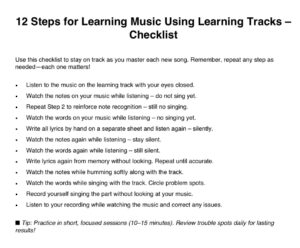 Want a faster, clearer way to lock in notes, words, and timing—without getting overwhelmed? While BHS brings this down to 6 steps, as we have more distractions, or age, we’ve found that “12 Steps for Learning Music Using Learning Tracks” gives you a simple, repeatable path. This method emphasizes active listening and deliberate practice over sight-reading ability, so it works for every singer—from brand-new voices to seasoned performers. Each step builds on the last (and you can repeat any step as needed). Don’t skip ahead—every step matters for singing the right notes, the right words, at the right time. 🎶
How to Use the 12 Steps for Learning Music Using Learning Tracks
- Listen with eyes closed
Start the learning track, close your eyes, and absorb the melody, rhythm, and overall feel of the song. No singing yet—just listen. - Track the notes (no singing)
Follow the notes on your sheet music while you listen to the learning track. Stay silent and notice intervals and rhythms. - Repeat notes + listen (still silent)
Make a second silent pass with the notes. You’re training your ear and eye together. - Track the lyrics (no singing)
Now listen again while following only the words. Notice phrasing, breaths, and prosody. - Write all the lyrics by hand
On a new page (or the back of your music), write every lyric from start to finish. Then listen again while reading your handwritten lyrics. Still no singing. - Back to the notes (silent)
Follow the notes again while the track plays. Reinforce pitch paths and rhythms. - Back to the words (silent)
Follow the lyrics again. Focus on diction and pacing. Still silent. - Lyric recall test (no looking)
Write the entire lyric again from memory. If you get stuck, listen while looking at the music, then try again. Stay here until you can write all the words without peeking. - Hum with the notes
Humming adds pitch without lyric complexity. Watch the notes and hum along with the track. Keep the voice light and relaxed. - Sing with the words
Now sing with the track while following the lyrics. Circle any trouble spots (pitch, rhythm, or words) as you go, then re-listen silently to those sections. - Record yourself (no music in hand)
Using your phone’s voice recorder, sing your part all the way through from memory. Don’t look at the music. This reveals what’s truly learned. - Audit your singing against the music (critical step!)
Play back your recording while reading the music to check notes and rhythms. If anything’s off, revisit the learning track—especially the circled trouble spots—then re-record and re-check.
Pro Tips to Maximize the 12 Steps for Learning Music Using Learning Tracks
- Short reps win: Practice in 10–15 minute bursts and revisit daily.
- One focus per pass: Notes-only, then words-only—don’t multitask.
- Mark mindfully: Circle fixes; don’t mark everything.
- Breathe on purpose: Pencil in breaths while you’re on the lyric steps.
- Consistency over intensity: Small daily sessions beat marathon cram sessions.
FAQ: 12 Steps for Learning Music Using Learning Tracks
- Do I need to read music?
No. This system relies on listening first, so it works even if you’re new to notation. - How long will it take?
Most singers feel confident after a few focused sessions spread across several days. Your mileage will vary by song complexity. - Can I repeat steps?
Absolutely. Repeat any step as needed—especially 8, 11, and 12 for lasting accuracy.
Learning music through these 12 steps isn’t just about mastering notes and lyrics—it’s about building confidence and connection. At Harmony Hills Chorus, we know that when singers perform from memory, something magical happens: the music comes alive. Without the barrier of sheet music, our eyes meet the director’s, our voices blend more freely, and our hearts reach the audience in a genuine, unforgettable way. Each voice becomes part of a larger story—shared through sound, expression, and unity. That’s the true harmony we strive for every week, one song and one step at a time.