
Pitch for Singing: The Anchor of Harmony
“Pitch is trust—it’s what keeps harmony balanced and voices united.”
Why Pitch for Singing Matters
 At Harmony Hills Chorus, we believe harmony begins with accuracy. Singing in tune isn’t just a technical achievement—it’s a way of listening, aligning, and connecting.
When each singer matches pitch with the ensemble, the sound becomes radiant. Chords “lock,” overtones shimmer, and that thrilling barbershop ring appears—the audible proof of voices truly united.
Understanding pitch for singing means developing awareness of both your ear and your breath, so your tone aligns naturally with the group and stays centered.
The Science of Singing in Tune
Pitch refers to how high or low a sound is perceived, determined by its frequency. When two or more voices synchronize frequencies precisely, harmony feels effortless and resonant.
The Acoustical Society of America notes that trained singers can perceive pitch differences as fine as three hertz—less than one-tenth of a semitone. This remarkable sensitivity allows skilled performers to blend seamlessly.
But staying in tune depends on more than hearing:
- Steady breath support maintains consistent tone.
- Balanced posture and resonance reduce pitch drift.
- Focused listening enables micro-adjustments that keep chords stable.
“Good singers don’t chase pitch—they center it.”
How to Strengthen Pitch Accuracy
Here are practical ways to refine your ear and keep your voice in tune:
- Tonal Centering – Start each warm-up by humming a unison note with a partner or piano. Notice the physical vibration when your pitches align.
- Interval Training – Practice common intervals (3rds, 5ths, octaves). Apps like Perfect Ear or Tenuto make this engaging with visual and audio feedback.
- Breath Stability – Keep airflow steady on long tones; wavering breath equals wavering pitch.
- Resonance Awareness – Adjust vowel shape slightly to bring a note “into focus.” A small lift in the soft palate often corrects flatness.
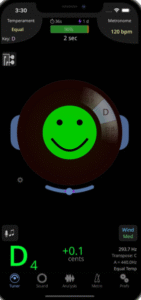
- Real-Time Feedback Tools – Apps such as TE Tuner, TonalEnergy Tuner, Vocal Pitch Monitor, and SingSharp show your pitch visually as you sing. These tools let you see pitch drift, helping you self-correct in the moment.
- Record and Reflect – Sing along with a track, then listen back. Are you consistently sharp or flat? Awareness is the first step toward precision.
Each exercise reinforces muscle memory and ear training so that accurate pitch becomes second nature.
The Harmony Hills Approach
During rehearsal, we focus as much on listening as on singing. Every member of Harmony Hills Chorus learns to “tune in” to the collective sound—matching breath, vowel, and resonance with one another.
Barbershop harmony depends on precision: even a few cents off can change a chord’s color. But when everyone locks in together, that electric overtone “ring” fills the room, reminding us that harmony is both science and soul.
“Pitch connects us—not just musically, but through shared attention and trust.”
At Harmony Hills, centering pitch is a practice of presence. When we listen deeply, align intentionally, and adjust gracefully, we become more than a chorus—we become one resonant voice.