Understanding Your Voice: The Science, the Surprise, and the Soul Behind Your Sound 🧠🎤
🎶 Introduction: Understanding Your Voice and Why It Sounds Different
Have you ever cringed at the sound of your voice on a recording and thought, “Do I really sound like that?” 😬
You’re not alone! Almost everyone has felt that moment of surprise—or even discomfort—when hearing their recorded voice for the first time. But here’s the good news: there’s a perfectly normal and scientific reason for it.
Understanding your voice—both its physical makeup and emotional impact—can help you move from self-doubt to self-confidence. When you truly know how your voice works, you can embrace it, refine it, and share it with authenticity. 🌟
🎧 The Science Behind Understanding Your Voice
When you speak, your voice travels through two main pathways that shape what you hear versus what others hear:
- Air conduction – This is how others hear you. Sound waves travel through the air, into their ears, and are translated into sound by their brains.
- Bone conduction – This is how you primarily hear yourself. Vibrations travel through the bones of your skull, emphasizing lower frequencies and making your voice sound deeper and richer.
That’s why your recorded voice often sounds higher, thinner, or “less like you.” The recording only captures air conduction—the version everyone else hears.
😮 Why Hearing Your Voice Feels So Strange
Because you hear your voice internally, it’s tied to your identity. Hearing it externally can feel like meeting yourself from the outside for the first time—it’s unfamiliar, and that can be unsettling.
This mismatch can lead to feelings of vulnerability, especially for singers, speakers, and anyone who relies on their voice professionally.
But here’s the truth:
Your recorded voice isn’t worse—it’s authentic. It’s the same sound that inspires, connects, and comforts others every day. 💖
🔍 Why Understanding Your Voice Matters
Learning and understanding your voice goes beyond curiosity—it’s key to improving confidence, communication, and artistry.
🎶 1. Authenticity Begins with Awareness
Once you understand the science behind your voice, you can begin to appreciate it as it truly is. Stop chasing the sound inside your head and start celebrating the voice that others already love hearing.
🎤 2. Self-Coaching Through Awareness
Recording yourself becomes a mirror, not a judgment. You can notice your inflection, tone, and emotional delivery, and learn to adjust with intention.
💬 3. Owning Your Voice = Owning Your Power
Your voice is more than sound—it’s your vibrational fingerprint. When you embrace it fully, you claim your unique ability to connect, influence, and inspire others.
💡 Tips for Embracing and Understanding Your Voice
✅ Record yourself often – The more you hear your recorded voice, the more natural it becomes.
✅ Work with a vocal coach – A supportive director or teacher can help you refine tone, resonance, and articulation.
✅ Use vocal training tools – Apps like Vanido, TonalEnergy, and Sing Sharp help with pitch, resonance, and self-awareness.
✅ Speak with purpose – When your voice aligns with your message, it naturally gains power and authenticity.
🎶 Internal Resource:
Explore more confidence-building techniques in our Vocal Technique Series
—a collection of tips from Harmony Hills Chorus designed to strengthen both your voice and your connection to music.
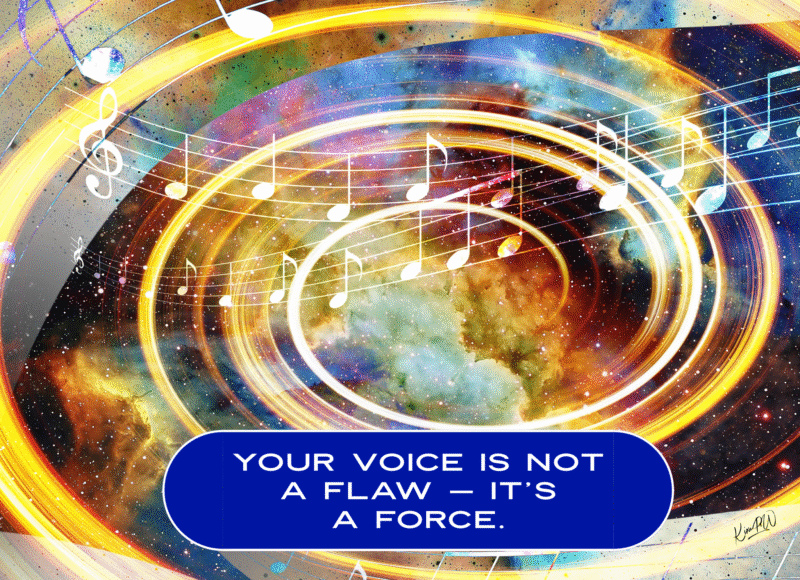
🌱 Final Thought: Your Voice Is Not a Flaw—It’s a Force
You were never meant to sound like anyone else. Your voice evolves just like you do—it’s your story, your soul, your energy made audible.
The more you honor it, the stronger and clearer it becomes. So next time you hear your recorded voice, smile and say:
“That’s me. That’s my sound. And I’m proud of it.” 💖🎤